 Dr. Farheen Jamal
Dark circles under the eyes are a common cosmetic concern that can make the face look tired, dull, or older than it actually is. They can affect both men and women and may appear as brown, black, blue, purple, or greyish discoloration depending on skin tone and the underlying cause. Although dark circles are usually not a serious medical problem, persistent under-eye darkness can affect confidence and make people search for effective and long-lasting treatment options.
If you are looking for Dark Circle Treatment in Patna, it is important to understand that dark circles do not have one universal cause. Genetics, aging, pigmentation, allergies, repeated eye rubbing, lack of sleep, dehydration, and changes in the structure of the under-eye area can all contribute to their appearance. In some people, several factors may occur together, which is why a treatment that works for one person may not produce the same result for another.
At Laservita Skin Clinic, Patna, treatment begins with understanding the individual characteristics of your under-eye area rather than simply applying a standard cream or procedure. Dr. Farheen Jamal evaluates the skin, pigmentation, texture, and other contributing factors before recommending an appropriate treatment approach.
What Are Dark Circles Under the Eyes?
Dark circles refer to a darker appearance of the skin beneath or around the eyes. The discoloration may result from increased pigmentation, visible blood vessels through thin skin, shadows created by hollowness, or a combination of these factors.
The skin around the eyes is naturally thinner and more delicate than many other areas of the face. As a result, changes in pigmentation, blood vessels, skin thickness, swelling, and facial structure can become more noticeable in this area.
Dark circles are also different from a sudden black eye caused by an injury. A bruise around the eye following trauma is a separate condition and may require medical evaluation, particularly if there is pain, swelling, or vision-related symptoms.
Why Do Dark Circles Develop?
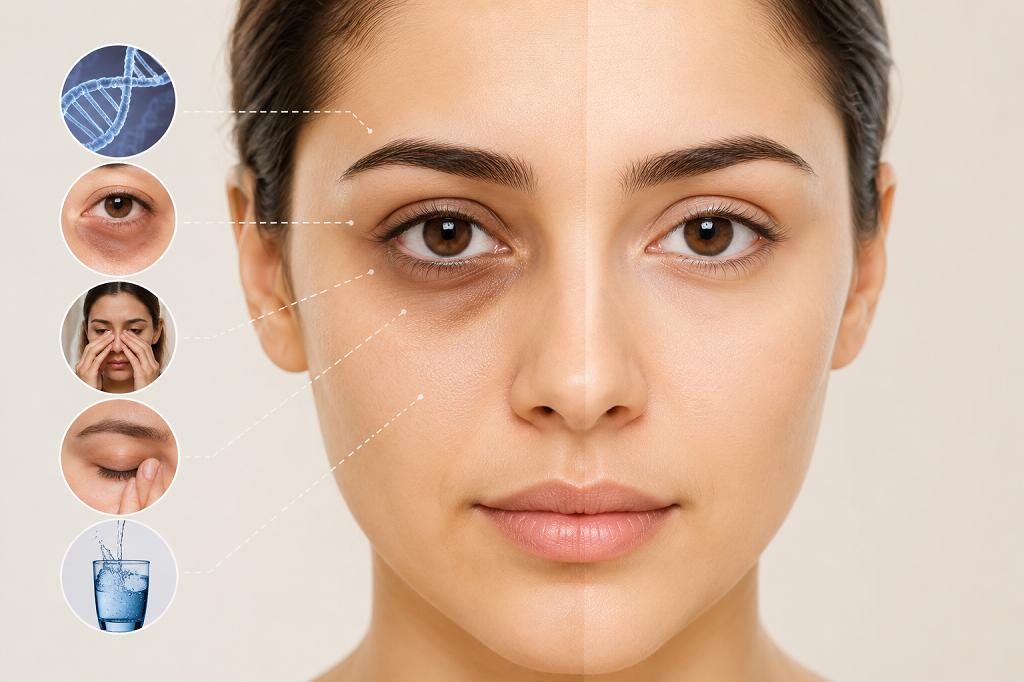
Dark circles can develop for several reasons, and identifying the main contributing factor is important before choosing treatment. In some individuals, the darkness is primarily related to pigmentation. In others, the skin may appear darker because underlying blood vessels are more visible. Structural changes such as under-eye hollowness can also create shadows that make the area look darker even when there is not significant pigmentation.

Genetics and Family History
Genetics can play an important role in the development of dark circles. If close family members have naturally darker under-eye areas, you may also be more likely to develop them. Genetic factors can influence skin thickness, pigmentation, facial structure, and the visibility of blood vessels.
When genetics are a major contributor, skincare alone may not completely eliminate the appearance of dark circles. A dermatologist can determine which treatment options are likely to provide meaningful improvement.
Lack of Sleep and Fatigue
Poor sleep can make dark circles appear more noticeable. When you are tired, the skin may look paler, making the blood vessels underneath the thin under-eye skin more visible. Fatigue can also make existing shadows and hollowness appear more prominent.
Improving sleep habits is therefore an important part of under-eye care, although lack of sleep is not the only cause of dark circles. If your under-eye darkness remains even after improving your sleep routine, another contributing factor may be involved.
Hyperpigmentation
Excess melanin production can cause brown or darker pigmentation around the eyes. Sun exposure can stimulate melanin production and may make existing pigmentation more noticeable. Post-inflammatory pigmentation caused by irritation or repeated rubbing can also contribute.
If pigmentation is the main cause, dermatologists may consider carefully selected topical products, chemical peels, laser-based procedures, or other treatments depending on skin type and sensitivity.
Laservita Skin Clinic also provides professional Pigmentation Treatment in Patna, where the type and depth of pigmentation are assessed before selecting an appropriate treatment approach. The clinic's pigmentation guidance emphasizes identifying the underlying cause before choosing treatments such as topical therapy, chemical peels, laser procedures, or customized skincare.
Aging and Skin Changes
As we age, the skin around the eyes becomes thinner and may lose some of its elasticity and volume. The under-eye area can develop hollows known as tear troughs, creating shadows that make the eyes appear darker or more tired.
In these cases, treating pigmentation alone may not provide the expected improvement because the darkness is partly caused by facial structure and shadowing. A dermatologist or qualified aesthetic professional can assess whether pigmentation, volume loss, skin laxity, or a combination of factors is responsible.
Allergies and Eye Rubbing
Allergies can contribute to dark circles, particularly when they cause nasal congestion, itchy eyes, watery eyes, or repeated rubbing. Allergy-related darkening is sometimes called "allergic shiners." Nasal congestion can affect blood flow around the eyes, making the area appear darker and sometimes puffier.
Repeatedly rubbing or scratching the delicate skin around the eyes can also cause irritation and may contribute to pigmentation. Avoiding unnecessary rubbing is therefore an important part of preventing worsening discoloration.
Dehydration
When the body is dehydrated, the skin can appear dull and less healthy. The under-eye area may look more sunken or tired, which can make existing dark circles more noticeable.
Drinking enough fluids throughout the day supports overall skin health, although dehydration alone is not responsible for every case of dark circles.
Lifestyle Factors
Stress, smoking, excessive alcohol consumption, poor sleep patterns, and prolonged fatigue can contribute to a tired appearance and may make dark circles more noticeable. These factors should be addressed alongside professional treatment rather than expecting a cosmetic procedure to compensate for an unhealthy routine.
Types of Dark Circles
Understanding the appearance of your dark circles can provide clues about their underlying cause, although only a professional assessment can determine the exact diagnosis.
| Type or Appearance | Possible Contributing Factors |
|---|---|
| Brown or dark brown | Hyperpigmentation, sun exposure, irritation |
| Blue or purple | Visible blood vessels, thin skin |
| Shadow-like darkness | Under-eye hollowness or facial structure |
| Puffiness with darkness | Fluid retention, allergies, aging |
| Mixed appearance | Combination of pigmentation, vascular and structural factors |
Many people have more than one type at the same time. For example, someone may have pigmentation combined with under-eye hollowness, making the darkness appear more prominent.
Can Dark Circles Be Completely Removed?
There is no single treatment that permanently removes dark circles in every person. This is an important point to understand before starting treatment.
If the primary cause is temporary fatigue, dehydration, or an allergy, addressing that cause may significantly improve the appearance. However, genetic pigmentation, aging-related structural changes, and chronic pigmentation may require ongoing skincare or professional treatment.
The goal of dermatological treatment is generally to reduce the appearance of darkness and improve the overall quality of the under-eye skin. If pigmentation is contributing to your dark circles, Pigmentation Treatment in Patna may be considered after a proper dermatological assessment, rather than promising permanent elimination in every case.
How to Treat Dark Circles at Home
Simple lifestyle and skincare measures can help reduce or prevent worsening of dark circles, particularly when lifestyle factors contribute to the problem.
Getting adequate sleep is one of the simplest steps. Adults generally benefit from a consistent sleep routine, and improving sleep may make tired-looking eyes less noticeable. However, if your dark circles are primarily genetic or pigmentation-related, sleep improvement alone may not remove them.
Protecting the under-eye area from sunlight is also important. Regular use of appropriate broad-spectrum sunscreen around the face, along with sunglasses and physical sun protection, can help reduce additional pigmentation caused by UV exposure.
Avoid rubbing or scratching the eyes, particularly if you have allergies or irritation. If allergies are responsible for persistent itching or congestion, addressing the allergy itself may be more useful than repeatedly treating the dark circles.
A cool compress can temporarily reduce puffiness and may make the under-eye area appear less tired. Adequate hydration and a balanced diet also support general skin health.
Skincare Ingredients That May Help
Some skincare ingredients may help improve pigmentation or support the appearance of the under-eye area, but the skin around the eyes is sensitive and not every active ingredient is suitable for direct application.
Vitamin C is commonly used in pigmentation-focused skincare because of its antioxidant properties and potential role in improving uneven skin tone. Other ingredients may also be recommended depending on the type of pigmentation and the patient's skin sensitivity.
It is important not to apply strong acids, bleaching agents, retinoids, or other active ingredients around the eyes without professional guidance. The wrong product can cause irritation, and inflammation may worsen pigmentation, particularly in people prone to post-inflammatory hyperpigmentation.
Professional Dark Circle Treatment in Patna
When dark circles persist despite good sleep, sun protection, and appropriate skincare, professional assessment can help determine the underlying cause. A dermatologist may examine the color, distribution, skin texture, degree of pigmentation, under-eye hollowness, puffiness, and surrounding skin before recommending treatment.
Treatment options can vary considerably. For pigmentation-dominant dark circles, a dermatologist may consider topical therapies, carefully selected chemical peels, or laser-based treatments. When vascular visibility or structural changes contribute to the appearance, other approaches may be considered. In selected cases, procedures such as laser therapy, fillers, or other aesthetic treatments may be appropriate, but these require careful assessment because the under-eye area is delicate.
Laservita Skin Clinic offers advanced dermatology and laser-based skin treatments with a personalized approach. The clinic describes its treatment process as beginning with expert consultation, followed by individualized treatment and aftercare support. Its website also highlights medical-grade, FDA-approved laser systems and customized treatment planning.
Laser Treatment for Dark Circles
Laser-based treatment may be considered when pigmentation or certain skin-quality concerns contribute significantly to the appearance of dark circles. The exact laser and treatment parameters depend on skin type, pigmentation, and the underlying cause.
Laser treatment should not be selected simply because it is an advanced procedure. A dermatologist should first determine whether pigmentation is actually responsible for the darkness. If the main issue is under-eye hollowness or vascular visibility, a pigmentation-focused laser may not address the entire problem.
Chemical Peels for Under-Eye Pigmentation
Carefully selected chemical peels may help reduce superficial pigmentation in appropriate patients. However, the under-eye region is much more sensitive than most facial areas, so the type, concentration, application technique, and patient selection are particularly important.
A dermatologist should determine whether a peel is appropriate for your skin type and pigmentation pattern. Stronger does not necessarily mean better, and aggressive treatment can cause irritation or worsen pigmentation.
Laservita's pigmentation treatment information notes that chemical peels may be considered as part of a customized pigmentation treatment plan depending on the patient's skin condition.
Why One Dark Circle Treatment Does Not Work for Everyone
A common mistake is assuming that dark circles are simply pigmentation. In reality, they can have several overlapping causes.
For example, one person may primarily have brown pigmentation from sun exposure, while another may have bluish discoloration because blood vessels are more visible through thin skin. Someone else may have under-eye hollowness that creates shadows. Treating all three people with the same cream or procedure would not be an effective approach.
A personalized consultation therefore matters more than simply choosing the most popular dark circle treatment.
How to Prevent Dark Circles From Getting Worse
Although not every cause of dark circles can be prevented, certain habits can help maintain healthier under-eye skin.
Protect your face from excessive sun exposure and use sunscreen appropriate for your skin type. Avoid rubbing your eyes, especially when they are itchy or irritated. Maintain a consistent sleep schedule, stay adequately hydrated, and manage factors such as stress and smoking that can contribute to a tired or aged appearance.
If you have allergies, controlling the underlying allergy and avoiding unnecessary eye rubbing may also help reduce the appearance of allergy-related dark circles.
When Should You Consult a Dermatologist?
You should consider professional evaluation when dark circles persist despite lifestyle improvements, become progressively more noticeable, or are accompanied by significant puffiness, irritation, itching, or other skin changes.
A particularly important situation is when darkening or swelling develops suddenly and mainly affects one eye. While common dark circles are usually harmless, one-sided changes can have different causes and should be assessed by a healthcare professional.
If the area around the eyes becomes painful, severely swollen, bruised after an injury, or associated with vision changes, medical evaluation should not be delayed.
Why Choose Laservita Skin Clinic for Dark Circle Treatment in Patna?
At Laservita Skin Clinic, the focus is on understanding the individual cause of a skin concern before recommending treatment. The clinic states that its approach includes expert consultation, personalized treatment, modern technology, and aftercare support.
Dr. Farheen Jamal provides dermatological and aesthetic care with a personalized approach to skin concerns. If your dark circles are associated with pigmentation, the treatment plan may involve professional pigmentation management. If skin texture or overall skin quality is also a concern, the dermatologist can assess whether other skin rejuvenation approaches are appropriate.
You can also explore related care such as Pigmentation Treatment in Patna, Skin Rejuvenation, and other dermatology services available at Laservita after discussing your individual needs with the clinic.
Frequently Asked Questions
Are dark circles caused only by lack of sleep?
No. Lack of sleep is only one possible contributing factor. Genetics, aging, pigmentation, allergies, eye rubbing, dehydration, and under-eye structural changes can also contribute to dark circles.
Can dark circles be permanently removed?
Not always. The outcome depends on the underlying cause. Some temporary causes can improve significantly, while genetic pigmentation, aging-related changes, or structural shadows may require ongoing management or professional treatments.
Which treatment is best for dark circles?
There is no single best treatment for everyone. A dermatologist should first determine whether pigmentation, visible blood vessels, allergies, skin thinning, or under-eye hollowness is the main contributor before recommending treatment.
Does rubbing the eyes cause dark circles?
Repeated rubbing can irritate the delicate skin around the eyes and may contribute to worsening discoloration. Managing the underlying cause of itching, such as allergies, can help reduce the need to rub the eyes.
Can pigmentation cause dark circles?
Yes. Increased melanin production can make the skin under the eyes appear brown or darker. Sun exposure and irritation may contribute to this type of pigmentation.
Can skincare creams remove dark circles?
Some topical ingredients may improve pigmentation or support skin quality, but results depend on the cause. Strong products should not be used around the eyes without professional guidance because irritation can make pigmentation worse.
Is laser treatment suitable for everyone?
No. Laser treatment is not appropriate for every type of dark circle. Skin type, pigmentation, underlying cause, and the presence of structural or vascular factors all need to be considered before treatment.
Does dehydration cause dark circles?
Dehydration can make the under-eye area appear dull or more sunken, potentially making existing dark circles more noticeable. However, hydration alone will not correct every type of dark circle.
Can allergies cause dark circles?
Yes. Nasal allergies can contribute to dark circles known as allergic shiners, often accompanied by congestion, itchy eyes, sneezing, or watery eyes.
When should I see a dermatologist for dark circles?
Consider consulting a dermatologist if dark circles persist despite good sleep and skincare, become progressively darker, or are accompanied by irritation, significant swelling, or other skin changes. Sudden one-sided darkening or swelling should also be medically evaluated.
Conclusion
Dark circles are common, but they are not always caused by tiredness or lack of sleep. Genetics, pigmentation, aging, allergies, eye rubbing, dehydration, lifestyle factors, and changes in the structure of the under-eye area can all contribute to their appearance. Because different causes require different approaches, simply trying multiple creams or home remedies may not provide the results you expect.
The most effective approach is to first understand why your dark circles are occurring. A dermatologist can assess the under-eye area and determine whether pigmentation, vascular visibility, skin changes, allergies, or structural shadows are contributing to the problem. Depending on the cause, treatment may involve lifestyle changes, skincare, pigmentation management, chemical peels, laser-based procedures, or other professionally selected options.
If you are looking for Dark Circle Treatment in Patna, Laservita Skin Clinic can provide a personalized dermatological assessment and guide you toward an appropriate treatment plan. Rather than promising a one-size-fits-all solution, the goal should be to improve the underlying cause and achieve natural-looking results safely.
Book a consultation with Dr. Farheen Jamal at Laservita Skin Clinic to understand the cause of your dark circles and discuss the most suitable treatment options for your skin.
Dr. Farheen Jamal
Dermatologist & Skin Specialist
Dr. Farheen Jamal is a dermatologist and skin specialist providing personalized care for pigmentation, melasma, acne, hair and skin concerns. She focuses on individualized diagnosis and evidence-based dermatological treatment tailored to each patient's skin type and condition.