 Dr. Farheen Jamal
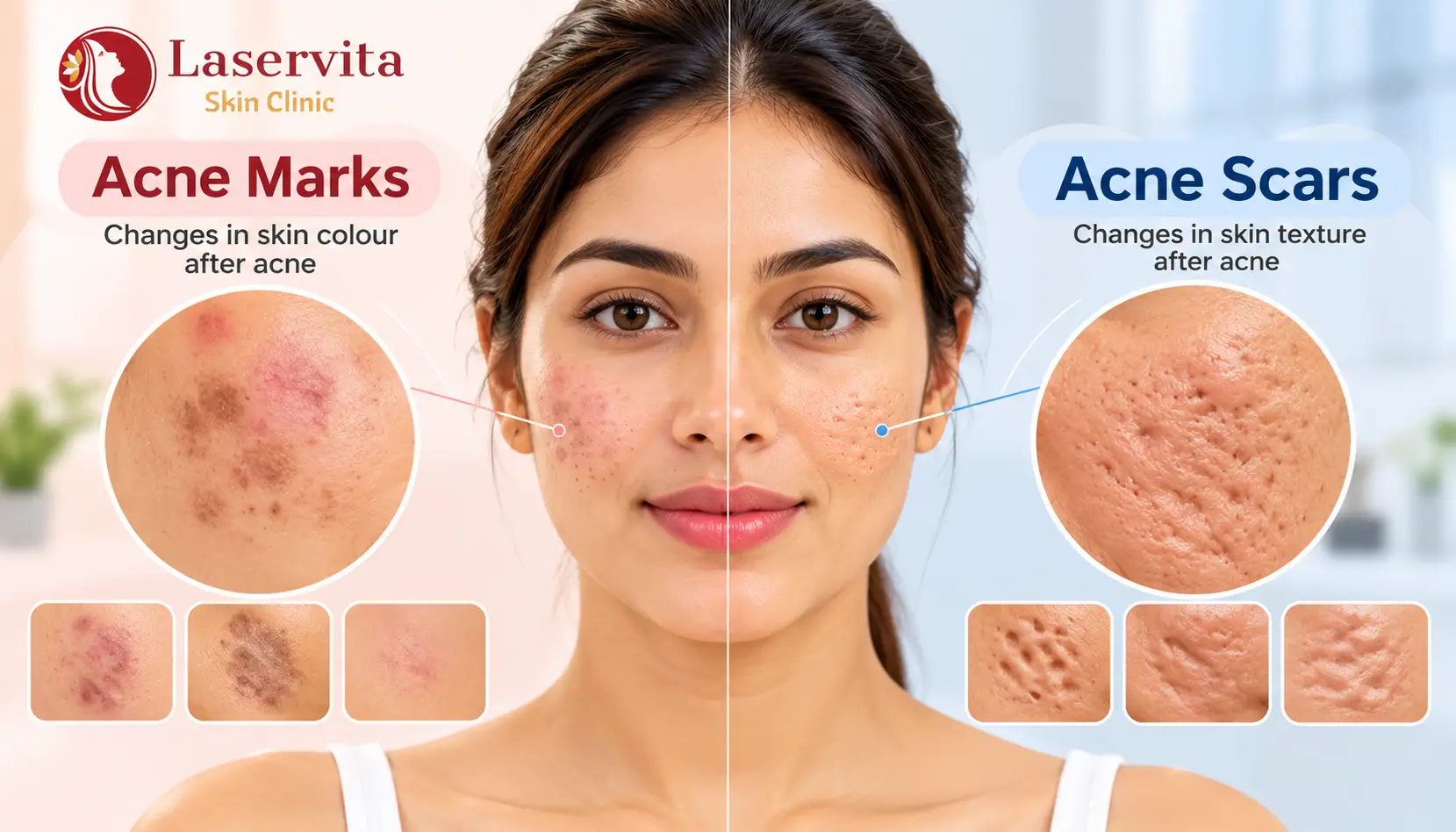
Acne can leave behind more than memories of breakouts. After pimples heal, you may notice dark or red spots, uneven skin tone, or changes in the texture of your skin. These concerns are often described as acne marks and acne scars, but they are not the same thing.
Understanding acne marks vs acne scars is important because the right treatment depends on whether you are dealing with a change in skin colour or a change in skin texture. Acne marks may gradually fade, while true acne scars can require dermatologist-led procedures to improve their appearance.
If you are concerned about persistent post-acne changes, you can explore acne scar treatment in Patna or consult a dermatologist for an assessment of your skin.
Acne Marks vs Acne Scars: What Is the Difference?
The simplest way to understand the difference is to look at colour versus texture.
- Acne marks: Usually refer to changes in skin colour that remain after an acne lesion heals. They may appear as red, pink, brown or darker spots depending on your skin tone and the type of post-acne change.
- Acne scars: Involve a change in the texture or structure of the skin. They may appear as depressions, pits, raised areas or uneven skin.
IADVL describes acne scars as permanent textural changes and indentations that can develop following severe or inflammatory acne. Treatment depends on the type and severity of the scar. You can read the IADVL acne scar guide for additional patient information.
What Are Acne Marks?
Acne marks are usually visible changes in skin colour that remain after an acne lesion has healed. They can be particularly noticeable when compared with the surrounding skin.
One common type is post-inflammatory hyperpigmentation, in which the skin develops darker areas following inflammation or injury. Acne can trigger this type of pigmentation, especially in people whose skin is more prone to darkening after inflammation.
Acne marks are different from depressed or raised scars because the primary concern is colour rather than a permanent change in the skin's surface texture.
What Do Acne Marks Look Like?
Depending on your skin tone and the original acne inflammation, acne marks may appear as:
- Brown or dark spots
- Red or pink areas
- Uneven skin tone
- Dark patches left after inflamed pimples
- Discolouration around previously active acne
If pigmentation is your main concern, our guide to pigmentation treatment by a dermatologist in Patna explains how different types of pigmentation may be assessed and treated.
What Are Acne Scars?
Acne scars are different because they involve changes in the texture or structure of the skin. They can develop when inflammation associated with acne affects deeper skin tissue during the healing process.
Some acne scars are depressed below the surrounding skin, while others can become raised. The appearance of a scar depends on factors such as the type and severity of acne, inflammation, healing response and individual skin characteristics.
Common Types of Acne Scars
Acne scars are commonly classified according to their appearance and structure.
- Ice-pick scars: Narrow, deep depressions that extend into the skin.
- Boxcar scars: Depressed scars with relatively defined edges.
- Rolling scars: Broader depressions that create an uneven or rolling appearance.
- Atrophic scars: Depressed or thinner areas caused by loss of supporting tissue.
- Hypertrophic or raised scars: Raised areas of scar tissue that remain above the surrounding skin.
Because different scar types respond differently to treatment, a dermatologist should identify the scar pattern before recommending a procedure.

Why Do Acne Marks and Scars Develop?
Acne causes inflammation in the skin. When an inflamed acne lesion heals, the skin may respond with changes in pigmentation or, in some cases, changes in collagen and tissue structure.
More severe inflammatory acne can increase the risk of long-term scarring. Picking, squeezing or repeatedly irritating acne can also worsen inflammation and increase the likelihood of post-acne changes.
For this reason, treating active acne early is an important part of reducing the risk of future marks and scars. Our guide on choosing an acne doctor in Patna covers factors to consider when persistent acne needs professional assessment.
Can Acne Marks Fade on Their Own?
Many acne-related colour changes can gradually become less noticeable over time. However, the speed of improvement varies considerably between individuals.
The depth and type of pigmentation, skin tone, ongoing acne, sun exposure and skincare routine can all influence how quickly marks improve.
Sun protection is particularly important because ultraviolet exposure can worsen pigmentation and make dark spots more persistent.
How Can You Support Fading Acne Marks?
- Use appropriate daily sun protection.
- Avoid picking or squeezing active acne.
- Use gentle skincare rather than harsh scrubbing.
- Follow dermatologist-recommended treatments when necessary.
- Address active acne to reduce the formation of new marks.
You can also review the IADVL skin-care guidance for general patient education about appropriate skincare and sun protection.
How Are Acne Marks Treated?
Treatment for acne marks depends on the cause and type of pigmentation. A dermatologist may first determine whether the pigmentation is actually related to acne or whether another condition is contributing to the colour change.
Depending on the assessment, treatment may involve topical skincare, prescription medicines, chemical peels or selected procedures.
Some patients may benefit from a personalized combination of skincare and professional treatments rather than relying on a single procedure.
Skincare and Topical Treatments
Dermatologists may recommend ingredients that can help address pigmentation and support more even-looking skin. The appropriate ingredient and strength depend on the individual's skin and medical history.
Using strong products without professional guidance can cause irritation, which may make pigmentation more noticeable in some people.
Chemical Peels
Selected chemical peels may be used to improve certain types of post-acne pigmentation and uneven skin tone. The type and depth of peel should be selected according to the patient's skin type and concern.
Laser and Other Procedures
In selected cases, dermatologists may consider laser-based or other procedural treatments for persistent pigmentation. The treatment choice depends on the cause, depth of pigmentation, skin type and previous response to treatment.
Patients interested in broader skin rejuvenation can also explore facial treatment in Patna after receiving an appropriate skin assessment.
How Are Acne Scars Treated?
True acne scars require a different approach because the concern involves skin texture rather than pigmentation alone.
There is no single treatment that is suitable for every acne scar. Dermatologists may use one or more procedures depending on the scar type, severity, skin type and treatment goals.
Subcision
Subcision is a procedure used for selected depressed acne scars. It works by releasing fibrous bands that can tether the scarred skin downward.
It may be considered particularly when rolling or tethered scars are contributing to an uneven skin surface.
Microneedling
Microneedling creates controlled micro-injuries in the skin to stimulate a wound-healing response and collagen remodeling. It may be used for selected acne scars and can sometimes form part of a combination treatment plan.
Laser Resurfacing
Fractional laser resurfacing may be used to improve the appearance and texture of certain acne scars by creating controlled zones of treatment that stimulate skin remodeling.
Laser treatment is not appropriate for every scar or every skin type, so assessment by an experienced dermatologist is important before proceeding.
Punch Techniques
Punch elevation or punch excision may be considered for selected small, well-defined acne scars. These techniques are chosen according to the individual scar's depth, shape and location.
For more information about procedural approaches, see our page on acne scar surgery treatment in Patna.

Can One Treatment Remove All Acne Marks and Scars?
No single treatment can be expected to remove every type of acne mark or scar. The response depends on what type of post-acne change is present and how severe it is.
Acne marks may gradually improve with appropriate pigmentation care, while textured acne scars often require procedures that target collagen, scar tissue or the structural changes beneath the skin.
Some people with moderate or severe acne scarring may require a combination of procedures rather than one treatment alone. IADVL notes that treatment planning depends on factors such as scar type, severity, pigmentation, textural changes and skin type.
Why Treating Active Acne Matters
Acne scar treatment is only one part of long-term skin management. If active inflammatory acne continues to develop, new marks and scars may continue to appear.
Managing active acne can therefore be an important first step before focusing extensively on residual scars.
Our article on the best acne scar treatment in Patna provides additional information about scar types, treatment options, sessions and realistic expectations.
How Can You Prevent New Acne Marks and Scars?
Prevention starts with appropriate management of active acne. The earlier persistent or severe acne is evaluated, the sooner a suitable treatment plan can be considered.
- Do not squeeze or pick pimples.
- Follow an appropriate acne treatment plan.
- Use gentle, non-comedogenic skincare products where suitable.
- Use sunscreen to help prevent worsening of post-acne pigmentation.
- Seek professional care if acne is painful, persistent or repeatedly leaves marks.
IADVL also advises against squeezing or picking pimples because this can increase the risk of scarring. If you have ongoing acne along with marks or scars, professional evaluation can help address the active disease as well as its aftermath.
When Should You See a Dermatologist?
Consider seeing a dermatologist if acne marks or scars remain noticeable despite consistent skincare, if new scars continue to develop, or if you are unsure whether you have pigmentation or true textural scarring.
A dermatologist can examine the skin and determine whether the main concern is active acne, post-inflammatory pigmentation, atrophic scarring, raised scarring or a combination of these problems.
If you are looking for a skin specialist, you can also read our guide to finding the best skin doctor in Patna and learn what factors to consider before choosing a dermatologist.
Acne Marks vs Acne Scars: Quick Comparison
| Feature | Acne Marks | Acne Scars |
|---|---|---|
| Main concern | Skin colour or pigmentation | Skin texture or structure |
| Typical appearance | Red, pink, brown or dark spots | Pits, depressions, raised areas or uneven texture |
| Can they fade? | Many may gradually fade | Usually require targeted treatment for significant improvement |
| Treatment approach | Skincare, topical treatment, peels or selected procedures | Subcision, microneedling, laser, punch techniques or combinations |
| Assessment needed? | Recommended for persistent pigmentation | Important because treatment depends on scar type |
Frequently Asked Questions About Acne Marks and Acne Scars
Are acne marks and acne scars the same thing?
No. Acne marks usually refer to colour changes left after acne, while acne scars involve changes in skin texture or structure.
How can I tell if I have an acne mark or acne scar?
If the skin is flat but has a darker or redder colour, it may be an acne mark. If there is a visible depression, pit, raised area or uneven texture, it may be an acne scar. A dermatologist can provide a more accurate assessment.
Do acne marks go away naturally?
Many post-acne colour changes can gradually fade, but the time required varies. Persistent pigmentation may benefit from dermatologist-guided treatment.
Can acne scars be completely removed?
Acne scars can often be improved, but complete removal cannot be guaranteed. Treatment results depend on the scar type, severity, skin type and selected treatment.
What is the best treatment for acne scars?
There is no single best treatment for every acne scar. Subcision, microneedling, laser resurfacing, punch procedures and combination approaches may be considered depending on the individual scar pattern.
Can laser treatment help acne scars?
Laser resurfacing may improve the appearance of selected acne scars by promoting skin remodeling. Suitability depends on the scar type and the patient's skin characteristics.
Can chemical peels treat acne marks?
Selected chemical peels may help improve certain types of post-acne pigmentation and uneven skin tone. The appropriate peel should be selected according to the individual's skin and condition.
Does picking pimples cause acne scars?
Picking or squeezing pimples can increase inflammation and may increase the risk of scarring and post-acne pigmentation.
How long does acne scar treatment take?
The treatment timeline varies according to scar type, severity, selected procedure and individual response. Some patients require multiple treatment sessions or a combination of procedures.
When should I see a dermatologist for acne marks?
Consider professional assessment when marks are persistent, worsening, affecting your confidence or occurring alongside ongoing acne or suspected scarring.
Final Thoughts
Understanding acne marks vs acne scars is the first step toward choosing an appropriate treatment approach. Acne marks generally involve changes in skin colour, while acne scars involve changes in skin texture or structure.
Many post-acne marks can gradually improve with appropriate skincare, sun protection and dermatologist-guided treatment. Textured acne scars may require procedures such as subcision, microneedling, laser resurfacing or punch techniques, depending on the individual scar.
The most important step is to identify exactly what type of post-acne change you have before starting treatment. A personalized dermatology assessment can help determine the most suitable approach and set realistic expectations.
For additional dermatology information and treatment options, visit Laservita Skin Clinic in Patna.
Frequently Asked Questions
Acne marks are usually changes in skin colour left after acne, such as red, pink or dark spots, while acne scars involve changes in skin texture such as depressions or raised areas.
Many acne marks can gradually fade with appropriate skincare, sun protection and treatment, although the time required varies depending on the type and severity of pigmentation.
Acne scars can represent lasting changes in skin texture. They may often be improved with appropriate dermatological treatments, but complete removal cannot be guaranteed.
Acne marks and acne scars are different types of post-acne changes. However, severe or inflamed acne can increase the risk of developing permanent textural scars.
Acne marks can develop after inflammation heals and may appear as darker or redder areas of skin. Picking or squeezing acne can increase inflammation and the risk of post-acne marks.
Acne scars can develop when inflammation from acne damages deeper skin tissue and affects collagen during the healing process.
Treatment depends on the type and cause of the marks. A dermatologist may recommend appropriate skincare, sun protection, topical treatments, chemical peels or selected procedures after assessing the skin.
Treatment depends on scar type and severity. Options may include subcision, microneedling, punch techniques, chemical procedures, laser resurfacing or combination treatments.
Laser resurfacing can improve the appearance of certain acne scars by stimulating skin remodeling. Suitability depends on scar type, skin type, severity and individual treatment factors.
Consider consulting a dermatologist when acne scars are persistent, noticeable, affecting your confidence or not improving with basic skincare. A dermatologist can assess the scar type and discuss suitable treatment options.
Related Treatments & Services
Dr. Farheen Jamal
Dermatologist & Skin Specialist
Dr. Farheen Jamal is a dermatologist and skin specialist providing personalized care for pigmentation, melasma, acne, hair and skin concerns. She focuses on individualized diagnosis and evidence-based dermatological treatment tailored to each patient's skin type and condition.