 Dr. Farheen Jamal
Managing acne can be challenging when your skin is easily irritated, becomes red after using skincare products, or feels dry and uncomfortable after cleansing. If you have sensitive skin, choosing the right acne treatment requires balancing breakout control with protecting your skin barrier.
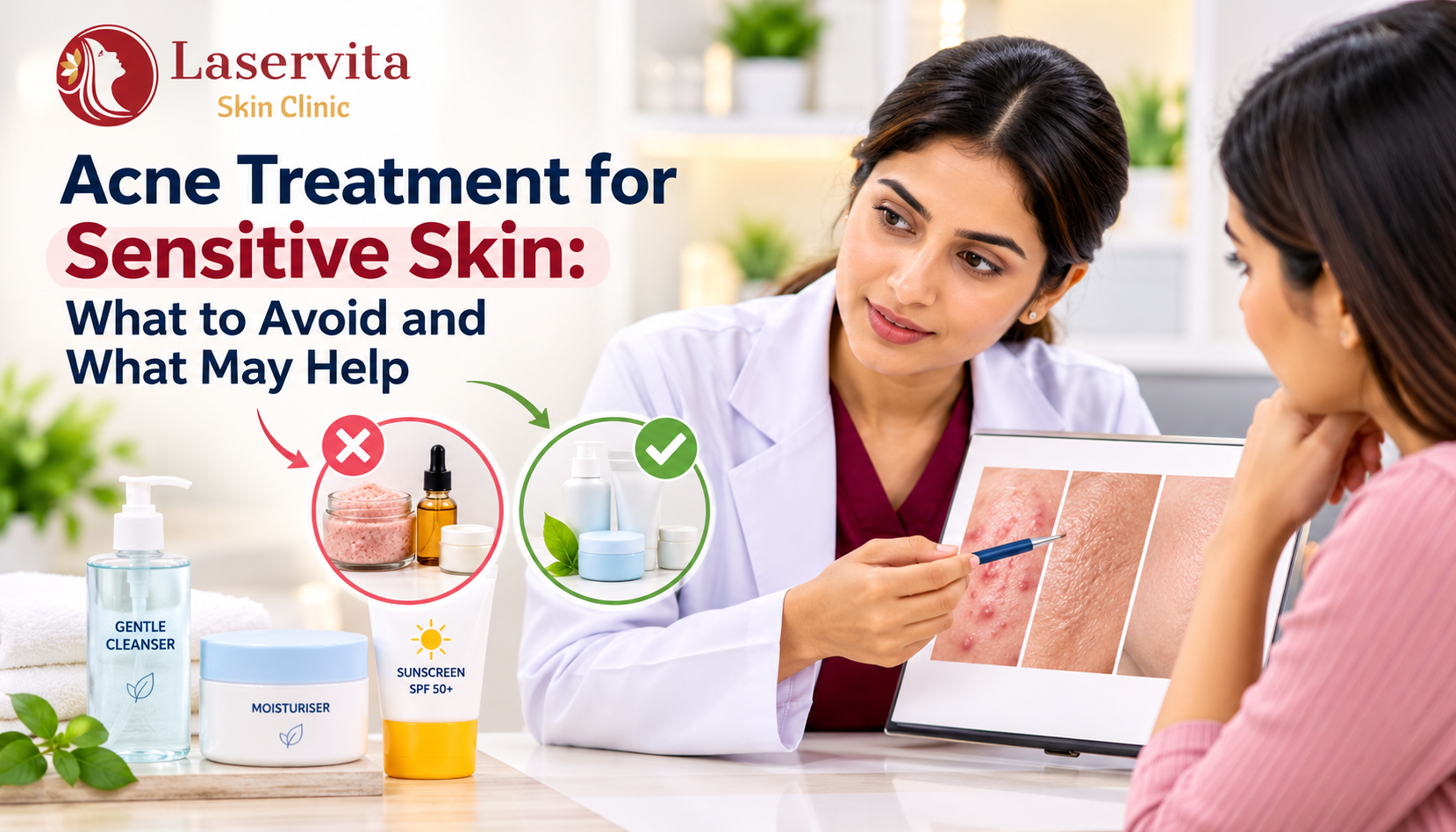
Acne treatment for sensitive skin usually starts with a gentle skincare routine, suitable acne products and careful introduction of active ingredients. Strong exfoliants, harsh scrubs, fragranced products and too many active ingredients at once may increase irritation without necessarily improving acne.
The right approach depends on your acne type, skin sensitivity, medical history and previous treatments. If breakouts are persistent, painful or leaving marks, a dermatologist can help you choose a more appropriate treatment plan.

What Is Sensitive Skin and How Does It Affect Acne?
Sensitive skin is a term commonly used for skin that reacts easily to skincare products, environmental conditions or certain cosmetic procedures. Symptoms may include stinging, burning, itching, dryness, tightness or redness.
Acne-prone skin can also be sensitive, particularly when the skin barrier has been irritated by frequent cleansing, over-exfoliation or acne treatments. However, sensitivity and acne are not the same condition. A dermatologist may need to determine whether symptoms are caused by acne, irritation, contact dermatitis or another skin problem.
When treating both concerns, the goal is to reduce breakouts without unnecessarily irritating the skin. A simpler routine is often a better starting point than using several strong products together.
Why Does Acne Treatment Sometimes Irritate Sensitive Skin?
Some acne treatments can cause temporary dryness, peeling, redness or stinging, especially when first introduced. The likelihood of irritation depends on the ingredient, concentration, frequency of use and condition of your skin barrier.
Using several active ingredients at once can make it difficult to identify which product is causing a reaction. Applying products more frequently than directed may also increase irritation.
Common Reasons for Acne Treatment Irritation
- Using strong exfoliating products too frequently.
- Combining multiple active ingredients without guidance.
- Washing the face repeatedly or scrubbing aggressively.
- Using products containing irritating fragrances or alcohol-based astringents.
- Applying acne products to already dry, cracked or inflamed skin.
- Introducing several new products at the same time.
If your acne is persistent or you are unsure which products are appropriate, you can read our guide to choosing an acne doctor in Patna.
What Should You Avoid When Treating Acne on Sensitive Skin?
Not every product marketed for acne is suitable for every skin type. Avoiding unnecessary irritation can make it easier to maintain a consistent routine.
1. Harsh Facial Scrubs
Scrubs with rough particles can irritate sensitive skin, particularly when acne lesions are inflamed. Vigorous rubbing may increase discomfort and aggravate redness.
Choose gentle cleansing instead of trying to remove acne by physically scrubbing the skin.
2. Too Many Active Ingredients
Using retinoids, exfoliating acids, benzoyl peroxide and other acne ingredients together without an appropriate plan may cause excessive dryness or irritation.
Some of these ingredients can be helpful for acne, but the appropriate choice and frequency depend on your skin. Introduce treatments carefully and follow the product instructions or your dermatologist's advice.
3. Strong Fragrances and Irritating Products
Fragrances, certain essential oils and astringent products may trigger discomfort in some people with sensitive skin. If a product repeatedly causes burning or redness, stop using it and review its ingredients.
4. Frequent Face Washing
Washing your face repeatedly does not necessarily improve acne. Excessive cleansing can strip the skin of its natural oils and leave it dry or irritated.
Use a gentle cleanser and avoid very hot water, rough washcloths and vigorous rubbing.
5. Picking or Squeezing Pimples
Picking acne lesions can increase inflammation and raise the risk of post-acne marks and scarring. Allowing lesions to heal and seeking suitable treatment is generally preferable to squeezing them.
For additional patient guidance, read the IADVL guide to acne.
What May Help Acne-Prone Sensitive Skin?
A practical routine should focus on gentle cleansing, appropriate moisturising, sun protection and acne treatment selected for your skin. You do not need a large number of products to build a useful skincare routine.
Use a Gentle Cleanser
Choose a mild cleanser that removes oil, sweat and daily impurities without leaving your skin feeling tight or uncomfortable. Fragrance-free options may be helpful if you are sensitive to fragrance.
Cleanse gently with lukewarm water and avoid scrubbing. If your face feels dry or irritated after washing, consider whether the cleanser is too harsh or whether you are cleansing too frequently.
Choose a Suitable Moisturiser
Moisturiser can help reduce dryness and support the skin barrier during acne treatment. Look for a product labelled non-comedogenic when possible, meaning it is formulated to be less likely to clog pores.
The right texture depends on your skin. A lightweight lotion or gel-cream may feel comfortable on some skin types, while a richer moisturiser may be more appropriate for dry skin.
Use Sunscreen Consistently
Sun protection helps reduce UV-related skin damage and can be particularly important when managing post-acne marks or using treatments that increase sensitivity to sunlight.
Choose a broad-spectrum sunscreen that suits your skin and does not cause irritation. If a particular formula stings or triggers breakouts, consider a different formulation rather than abandoning sun protection altogether.

Which Acne Ingredients May Help Sensitive Skin?
Several ingredients may be used to manage acne, but none is suitable for everyone. The right option depends on the type of acne, how sensitive your skin is and whether you have other skin conditions.
Salicylic Acid
Salicylic acid helps exfoliate inside pores and may be useful for certain types of clogged pores and comedonal acne. However, it can cause dryness or stinging in sensitive skin, especially when used frequently or in combination with other exfoliants.
If you are considering a salicylic acid product, start cautiously and follow the product directions. Stop and seek advice if irritation becomes persistent or significant.
Benzoyl Peroxide
Benzoyl peroxide is a commonly used acne treatment that can help reduce acne-causing bacteria and inflammatory lesions. It may also cause dryness, redness or irritation.
A dermatologist can advise whether a lower concentration or less frequent application is appropriate for your skin. Be aware that benzoyl peroxide can bleach fabrics, including towels and pillowcases.
Azelaic Acid
Azelaic acid may help some people with acne and post-acne pigmentation. Although it can be useful in selected cases, it may still cause tingling, dryness or irritation.
Discuss its suitability with a dermatologist if your skin reacts easily or you are already using other active ingredients.
Topical Retinoids
Topical retinoids may help treat clogged pores and certain forms of acne. They can cause dryness, peeling and irritation, particularly when treatment begins.
They should be introduced according to professional or product guidance. Topical retinoids are generally avoided during pregnancy or when planning pregnancy unless a treating clinician provides specific advice; consult your healthcare professional about safe alternatives.
How to Build a Simple Skincare Routine for Sensitive Skin
A consistent routine is often easier to tolerate than a complicated regimen. Start with the basics and introduce acne treatment according to your skin's response.
Morning Routine
- Cleanse with a gentle cleanser, or rinse with water if that is more comfortable for your skin.
- Apply a moisturiser suited to your skin type.
- Finish with a suitable broad-spectrum sunscreen.
Evening Routine
- Gently remove sunscreen, makeup and daily impurities.
- Apply your selected acne treatment according to its directions or your dermatologist's instructions.
- Use a moisturiser to help maintain skin comfort and hydration.
If a prescribed treatment irritates your skin, do not automatically increase the amount or frequency. Ask your dermatologist whether the application method, frequency or treatment itself should be adjusted.
You can find more general guidance in the IADVL's skin-care basics guide.
What Should You Do If Acne Products Cause Burning or Redness?
Mild dryness or irritation can occur with some acne treatments, but significant burning should not be ignored. Persistent symptoms may indicate that the product is unsuitable, is being used too frequently or is aggravating another skin condition.
If a product causes a strong reaction, stop using the suspected product and avoid adding further active ingredients while the skin settles. Use a gentle cleanser and a moisturiser that you already tolerate. Seek medical advice if symptoms are severe, persistent or worsening.
Get prompt medical attention if you develop marked swelling, blistering, severe pain, widespread rash or swelling around the eyes or lips. Breathing difficulty or swelling of the tongue or throat requires emergency care.
When Should You See a Dermatologist for Sensitive Skin and Acne?
Professional assessment can be useful when acne and sensitivity occur together, especially if over-the-counter products repeatedly cause irritation or your breakouts are not improving.
Consider booking a consultation if you experience:
- Persistent or recurring acne despite a consistent routine.
- Painful, deep or inflamed pimples.
- Acne that is leaving dark marks or scars.
- Frequent burning, itching, peeling or redness after products.
- Sudden worsening of acne or a rash that resembles acne.
- Uncertainty about which active ingredients are suitable for your skin.
If you are researching local care, our guide to the best skin doctor in Patna explains what to consider when choosing a skin specialist.
Can Professional Acne Treatment Help Sensitive Skin?
Yes, a dermatologist can assess the type of acne you have and determine how to manage it while accounting for your skin's sensitivity. Treatment may involve adjusting your skincare routine, choosing suitable topical medication or considering oral treatment when clinically appropriate.
Not everyone needs procedures or multiple products. The treatment plan should be based on the severity of acne, previous treatment response, medical history and tolerance.
For patients who develop persistent texture changes after acne heals, acne scar treatment in Patna may be discussed after active acne has been assessed and managed.
Acne Marks, Acne Scars and Sensitive Skin
Acne marks and acne scars are different concerns. Marks often involve colour changes after inflammation, while scars involve changes in skin texture or structure. Sensitive skin may need careful management during treatment for either concern.
If dark spots are your main concern, a dermatologist can assess the cause and discuss appropriate options. You can read about pigmentation treatment by a dermatologist in Patna for more information about persistent pigmentation.
If you have both active acne and scarring, treatment may need to be planned in stages. Controlling active breakouts is often an important part of reducing the risk of further scars.
How to Choose a Dermatology Clinic for Acne Treatment
When selecting a clinic, look for appropriate medical qualifications, a clear consultation process, realistic treatment expectations and guidance about possible side effects. Be cautious of claims promising instant, guaranteed or completely risk-free results.
A good consultation should allow you to discuss your symptoms, current products, previous reactions, medical history and treatment preferences. The clinician should explain why a treatment is being recommended and what to do if irritation occurs.
You can also explore the benefits of consulting a private dermatologist in Patna when comparing consultation and follow-up options.

Final Thoughts
Acne treatment for sensitive skin works best when it addresses breakouts without unnecessarily compromising the skin barrier. Gentle cleansing, a suitable moisturiser, daily sun protection and careful use of acne treatments can provide a practical starting point.
Avoid harsh scrubbing, excessive exfoliation and introducing several active ingredients at once. If acne continues to worsen or your skin repeatedly reacts to treatment, a dermatologist can help identify the cause and develop a personalized plan.
For more information about dermatology services and skin care, visit Laservita Skin Clinic in Patna.
Frequently Asked Questions
The best approach depends on your acne severity, skin sensitivity and medical history. A dermatologist may recommend a gentle skincare routine and carefully selected acne treatments introduced at an appropriate strength and frequency.
Avoid harsh scrubs, frequent exfoliation, irritating fragrances and multiple strong active ingredients used together. Products that cause persistent burning, redness or peeling should be reviewed with a dermatologist.
Some people with sensitive skin may tolerate salicylic acid, but it can cause dryness or irritation. Suitability depends on the product strength, frequency of use and your skin condition.
Yes. Benzoyl peroxide can cause dryness, redness, peeling or irritation in some people. A dermatologist can advise whether it is suitable and how to introduce it carefully.
If you develop significant burning, swelling, severe redness or persistent irritation, stop using the suspected irritating product and seek medical advice. Do not continue through a severe reaction without professional guidance.
A simple routine may include a gentle cleanser, a suitable non-comedogenic moisturiser and broad-spectrum sunscreen. Additional acne treatments should be selected according to your skin's needs and tolerance.
Not always. Lemon juice, toothpaste, essential oils and abrasive home remedies can irritate the skin. Choose evidence-based skincare and seek professional advice when needed.
Some heavy or unsuitable products may contribute to clogged pores in certain people. A lightweight, non-comedogenic moisturiser that suits your skin can help support the skin barrier without unnecessarily adding irritation.
Consult a dermatologist if acne is painful, persistent, worsening, leaving scars or not improving with gentle care. Seek prompt medical advice for severe swelling, blistering or a significant reaction to a skincare product.
Improvement often takes several weeks and varies according to acne severity, the treatment selected and individual tolerance. Your dermatologist can advise when to review the plan or adjust treatment.
Related Treatments & Services
Dr. Farheen Jamal
Dermatologist & Skin Specialist
Dr. Farheen Jamal is a dermatologist and skin specialist providing personalized care for pigmentation, melasma, acne, hair and skin concerns. She focuses on individualized diagnosis and evidence-based dermatological treatment tailored to each patient's skin type and condition.