 Dr. Farheen Jamal
Dark circles under the eyes can make the face appear tired, even when you feel well rested. They may develop because of pigmentation, genetics, thin under-eye skin, visible blood vessels, ageing, allergies or shadows created by the natural contours of the face. Since several factors can contribute to under-eye darkness, the right treatment depends on identifying the underlying cause.
If you are looking for dark circles treatment in Patna, understanding the difference between pigmentation and structural shadows is an important first step. Some people may benefit from skincare and sun protection, while others may need dermatologist-guided treatments or assessment of under-eye volume loss.
At Laservita Skin Clinic, patients can explore dermatology and aesthetic skin-care options. A professional assessment can help determine which treatments may be appropriate for your individual concerns and skin type.

What Are Dark Circles Under the Eyes?
Dark circles refer to darker-looking skin or shadows around the lower eyelids. They may appear brown, grey, blue, purple or almost black, depending on skin tone, pigmentation, blood vessels and facial anatomy.
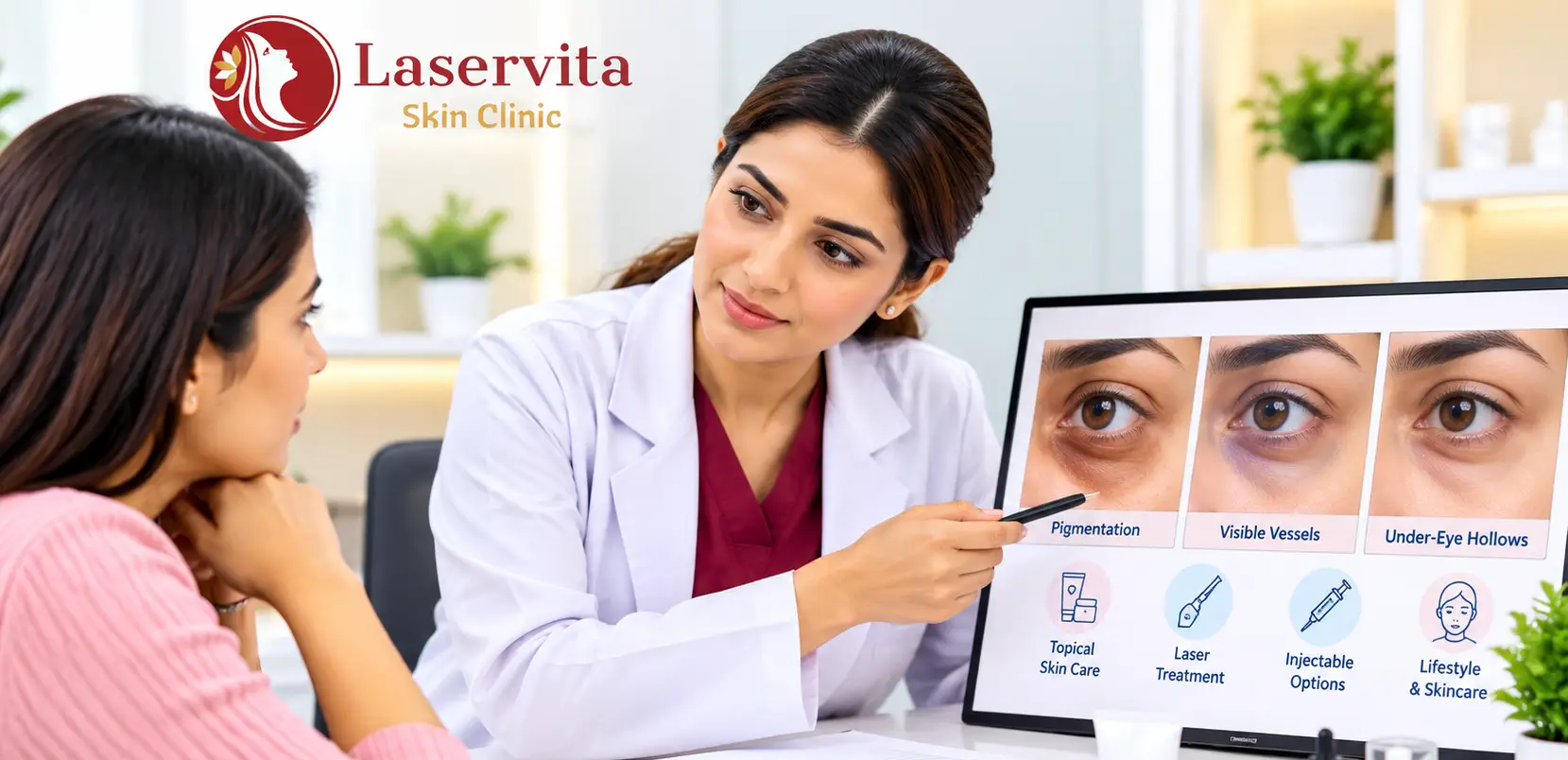
Dark circles are not a single skin condition. In some people, the main concern is increased pigmentation. In others, thin skin allows underlying blood vessels to show through, or a hollow beneath the eyes creates a shadow that resembles pigmentation.
These differences matter because a treatment that helps pigmentation may not improve a shadow caused by under-eye hollows. A dermatologist can examine the area and help distinguish between the possible causes.
What Causes Dark Circles?
Several factors can contribute to under-eye darkness, and more than one may be present at the same time.
1. Genetics and Family History
Some people naturally have darker pigmentation or a facial structure that makes the under-eye area appear shadowed. Family history can influence skin colour, eyelid anatomy and the tendency to develop dark circles.
When genetics are a major factor, skincare may improve the appearance of the skin but may not eliminate the concern completely.
2. Pigmentation Around the Eyes
Increased melanin can cause brown or dark patches around the eyes. Pigmentation may be influenced by genetics, inflammation, rubbing, sun exposure and individual skin characteristics.
If pigmentation is the main concern, a dermatologist may assess whether treatments used for other forms of facial pigmentation are appropriate for the delicate under-eye area. You can also read our guide to pigmentation treatment by a dermatologist in Patna.
3. Thin Skin and Visible Blood Vessels
The skin around the eyes is relatively thin. When underlying blood vessels are more visible, the area may appear bluish, purplish or darker than the surrounding skin.
This type of dark circle is different from brown pigmentation, so pigment-targeting creams may not provide the improvement someone expects.
4. Ageing and Under-Eye Hollows
As facial tissues change with age, the under-eye area may develop hollows or more noticeable contours. These changes can cast shadows that make the area look darker, particularly under certain lighting conditions.
When shadows or volume changes are the primary cause, a cream designed to fade pigmentation may have limited benefit.
5. Allergies and Eye Rubbing
Allergies can cause itching, watering and swelling around the eyes. Repeated rubbing may irritate the delicate skin and contribute to pigmentation in some people.
Managing the underlying allergy and avoiding rubbing may help reduce ongoing irritation. Persistent itching, swelling or other allergy symptoms should be discussed with an appropriate healthcare professional.
6. Sleep, Lifestyle and Temporary Puffiness
Insufficient sleep can make existing dark circles or under-eye shadows more noticeable. Fluid retention may also cause puffiness, which changes the way light falls on the under-eye area.
However, lack of sleep is not the only cause of dark circles. Getting adequate rest may help with tired-looking eyes, but it will not necessarily correct genetic pigmentation or structural hollows.
How Can You Identify the Type of Dark Circles?
Looking at the colour and shape of the under-eye area can provide clues, although a visual check at home cannot confirm the cause.
- Brown or dark patches: May suggest pigmentation.
- Blue or purple tones: May be associated with visible blood vessels and thin skin.
- A groove or hollow beneath the eyes: May create shadows that resemble dark circles.
- Puffiness with darkness: May reflect a combination of swelling and shadowing.
- Itching and rubbing: May indicate irritation or an allergy that needs attention.
Different causes can overlap. A dermatologist can assess the colour, texture, facial contours and medical history before recommending treatment.

Dark Circles Treatment in Patna: What Options May Help?
The most appropriate dark circles treatment in Patna depends on whether the main concern is pigmentation, visible blood vessels, allergies, puffiness or under-eye hollows. No single treatment is suitable for everyone.
1. Skincare and Sun Protection
When pigmentation contributes to dark circles, appropriate skincare and sun protection may help prevent further darkening. A dermatologist may recommend products suited to the under-eye area and your skin's sensitivity.
Avoid applying strong facial exfoliants or unprescribed skin-lightening products close to the eyes. The skin in this area is delicate and can become irritated easily.
2. Topical Products for Pigmentation
Depending on the cause, a dermatologist may consider selected topical ingredients to help manage pigmentation. The choice depends on your skin type, the location of the pigmentation and the likelihood of irritation.
Not every brightening cream is appropriate for the eyelids or under-eye skin. Products should be used according to professional guidance, particularly if the area is sensitive or already irritated.
For a broader explanation of pigment-related concerns, see our article about skin brightening and pigmentation treatment in Patna.
3. Laser Treatments for Selected Cases
Some laser or light-based treatments may be considered for carefully selected pigment-related or vascular concerns. However, suitability depends on the diagnosis, skin tone, equipment, treatment settings and the risks associated with working near the eyes.
Laser treatment is not a universal solution for dark circles. It may not address shadows caused by hollows or changes in facial structure, and inappropriate treatment can cause unwanted pigmentation or irritation.
Anyone considering a procedure around the eyes should receive an individual assessment from a qualified professional experienced in the proposed treatment.
4. Treatments for Under-Eye Hollows
When dark circles are primarily caused by a hollow or shadow beneath the eyes, the treatment approach differs from that used for pigmentation. A qualified clinician may discuss suitable options after assessing facial anatomy, medical history and individual risks.
Procedures around the eyes require particular care because of the anatomy and potential complications. Not everyone is a suitable candidate, and treatment outcomes cannot be guaranteed.
5. Addressing Allergies and Irritation
If allergies or repeated eye rubbing contribute to under-eye darkness, addressing the underlying problem may be more useful than focusing only on cosmetic treatments.
Depending on your symptoms, a healthcare professional may recommend allergy management or further assessment. Avoid using medicated creams around the eyes without appropriate advice.
Can Home Remedies Reduce Dark Circles?
Simple home-care measures may improve the appearance of tired eyes or temporary puffiness. However, they are unlikely to correct every cause of dark circles.
Use a Cool Compress
A clean, cool compress may temporarily reduce puffiness and make the under-eye area feel more comfortable. Avoid placing ice directly on the skin or applying excessive pressure around the eyes.
Maintain a Consistent Sleep Routine
Adequate sleep may help reduce the tired appearance associated with insufficient rest. Try to maintain a regular sleep schedule and notice whether your under-eye appearance changes when you are well rested.
Avoid Rubbing Your Eyes
Repeated rubbing can irritate the delicate under-eye skin. If itching is persistent, consider whether allergies or another skin problem may be contributing and seek appropriate advice.
Protect the Skin From Sun Exposure
Sun protection can help reduce further pigmentation. Choose products suitable for the eye area, avoid direct contact with the eyes and follow the product instructions.
For general information on facial pigmentation, you can consult the IADVL patient guide to facial pigmentation.
What Should You Avoid When Treating Dark Circles?
The skin around the eyes can react easily to irritating products and unsuitable procedures. Avoiding unnecessary irritation is an important part of under-eye care.
- Do not apply lemon juice, harsh scrubs or irritating home remedies around the eyes.
- Avoid using strong bleaching products without professional guidance.
- Do not use prescription steroid creams around the eyes unless specifically directed by a qualified clinician.
- Avoid rubbing, scratching or repeatedly stretching the under-eye skin.
- Be cautious of products that promise instant or permanent removal of dark circles.
- Do not undergo laser or injectable procedures without an appropriate assessment of risks and suitability.
When choosing skin treatments, it is important to distinguish between pigmentation, structural shadows and other medical causes. A general facial or brightening treatment may not address the underlying reason for your dark circles.
How Long Does Dark Circles Treatment Take?
The timeline depends on the cause and the treatment selected. Some temporary puffiness may improve relatively quickly, while pigmentation may require consistent care over weeks or longer. Genetic dark circles and structural hollows may respond differently and may not disappear completely.
Your dermatologist can explain what improvement is realistic, how long a treatment trial may take and whether follow-up is needed. Be cautious of claims that guarantee complete removal within a fixed number of days.
When Should You Consult a Dermatologist?
Consider professional assessment if dark circles persist despite basic care, become more noticeable or affect your confidence. A dermatologist can help determine whether pigmentation, irritation, visible blood vessels or another factor is responsible.
Seek medical assessment promptly if darkness or swelling develops suddenly, particularly under only one eye, or is accompanied by pain, redness, vision changes or other unusual symptoms. These features may require evaluation beyond cosmetic treatment.
If you are researching a skin specialist, our guide to choosing the best skin doctor in Patna outlines factors to consider when looking for qualified dermatology care.
How to Choose the Right Dark Circles Treatment
Before starting treatment, consider whether the proposed approach addresses your specific cause of under-eye darkness. A suitable consultation should include an assessment of your skin, symptoms, medical history and expectations.
Ask the clinician about expected benefits, possible side effects, recovery time, alternatives and the limitations of the treatment. Treatments around the eyes should be selected carefully because this area is particularly delicate.
Depending on your wider skin concerns, you may also wish to learn about facial treatment options in Patna. These services should not be assumed to treat dark circles unless the proposed treatment is specifically appropriate for the cause.
Related Skin Concerns and Dermatology Care
Dark circles may occur alongside other skin concerns, such as pigmentation, uneven tone or age-related changes. Each concern should be assessed individually rather than assuming one treatment will address them all.
If you are comparing dermatology services, these Laservita resources may help you learn more about related skin-care topics:
Final Thoughts
Dark circles treatment in Patna should begin with understanding why the under-eye area looks darker. Pigmentation, genetics, visible blood vessels, allergies, ageing and facial contours can all contribute, and the right approach depends on the cause.
Gentle skincare, sun protection, adequate rest and avoiding eye rubbing may help in selected cases. Other concerns may require dermatologist-guided topical treatments or carefully selected procedures. No single treatment can guarantee complete or permanent removal for everyone.
Before choosing a treatment, seek an appropriate assessment and discuss realistic expectations, possible risks and alternatives. A personalized approach is the best way to make an informed decision about under-eye care.
Frequently Asked Questions
Dark circles can be associated with genetics, pigmentation, ageing, thin skin, visible blood vessels, allergies, rubbing the eyes, lack of sleep or shadows caused by under-eye hollows.
The appropriate treatment depends on the cause of the dark circles. A dermatologist can assess whether pigmentation, visible blood vessels, skin changes or under-eye hollows are contributing and recommend suitable options.
Complete or permanent removal cannot be guaranteed. Results depend on the underlying cause, genetics, skin characteristics and the treatment selected. Some causes may be managed more effectively than others.
Insufficient sleep can make existing dark circles and under-eye shadows more noticeable, although it is not the only cause. Genetics, pigmentation and under-eye anatomy can also contribute.
Yes. Increased melanin and post-inflammatory pigmentation can contribute to darker skin around the eyes. A dermatologist can assess the type of pigmentation and discuss appropriate treatment options.
Some eye-care products containing ingredients such as caffeine or selected pigment-targeting ingredients may help certain concerns. The benefits vary, and products intended for the under-eye area should be chosen carefully to avoid irritation.
Selected laser treatments may help certain pigment-related or vascular causes of dark circles. Suitability depends on the diagnosis, skin type and treatment risks, particularly because the procedure is performed near the eyes.
A cool compress may temporarily reduce puffiness or the appearance of prominent blood vessels. Adequate sleep and avoiding eye rubbing may also help, but home remedies may not address genetic pigmentation or structural shadows.
Consider a consultation if dark circles persist, worsen, cause concern or do not improve with basic skincare. Seek medical assessment promptly if darkness or swelling develops under only one eye or is accompanied by other unusual symptoms.
The timeline varies according to the cause and treatment. Pigmentation treatments may take several weeks or longer, while treatments for structural hollows involve different considerations. A dermatologist can explain realistic expectations after assessment.
Related Treatments & Services
Dr. Farheen Jamal
Dermatologist & Skin Specialist
Dr. Farheen Jamal is a dermatologist and skin specialist providing personalized care for pigmentation, melasma, acne, hair and skin concerns. She focuses on individualized diagnosis and evidence-based dermatological treatment tailored to each patient's skin type and condition.