 Dr. Farheen Jamal
Skin tags are small, soft growths that commonly appear on the neck, underarms, eyelids, under the breasts and other areas where skin folds or rubs against clothing. They are usually harmless, but they may catch on jewellery, become irritated or cause cosmetic concerns. If you are considering skin tag removal in Patna, understanding the available methods, potential risks and aftercare can help you make an informed decision.
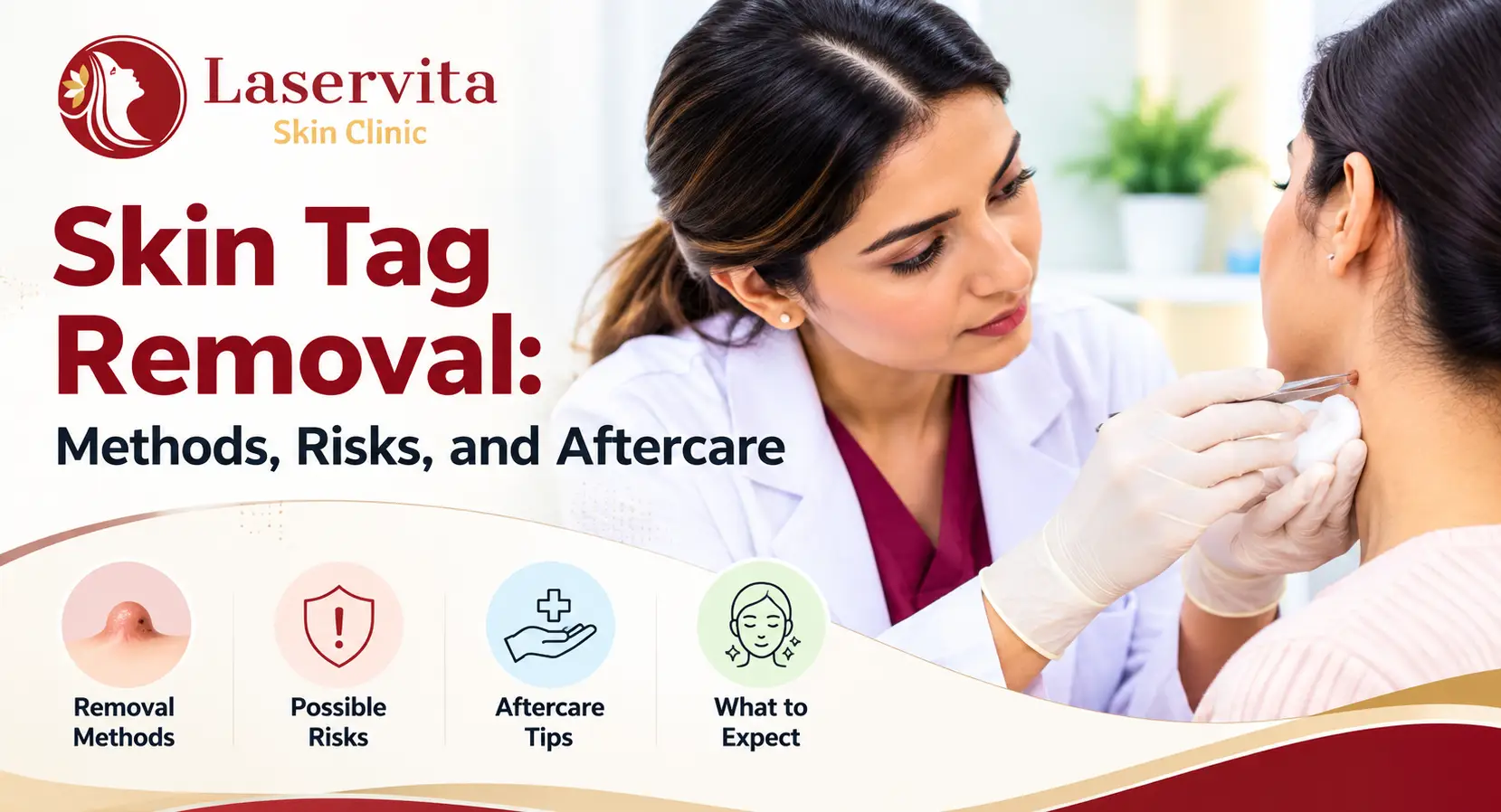
Professional removal may involve sterile snip excision, cryotherapy or cauterization, depending on the size and location of the growth. Before any procedure, a qualified clinician should confirm that the growth is actually a skin tag rather than another type of skin lesion.
Explore skin tag removal treatment in Patna to learn about clinical assessment and available treatment options.

What Are Skin Tags?
Skin tags, medically known as acrochordons, are small, soft growths made up of skin and supporting tissue. They may be skin-coloured, slightly darker or attached to the skin by a narrow stalk. Most are painless and develop gradually.
Skin tags commonly occur in areas exposed to friction, including the neck, armpits, groin, eyelids and skin folds. They may be only a few millimetres wide, although some grow larger over time.
Most typical skin tags are benign and do not require treatment for medical reasons. Removal may be considered when a tag becomes irritated, repeatedly catches on clothing or jewellery, or causes cosmetic concern.
For an overview of the clinic and its dermatology services, visit the Laservita Skin Clinic website.
What Causes Skin Tags?
The exact reason some people develop skin tags is not fully understood. However, several factors may be associated with their development.
Friction and Skin Folds
Skin tags often appear where skin rubs against itself or clothing. This is why they are common around the neck, underarms, groin and beneath the breasts. Repeated friction may contribute to their development in susceptible individuals.
Age and Family History
Skin tags become more common with age, and some people appear to have a family tendency to develop them. Having one skin tag does not necessarily mean that more will develop, but new tags may appear over time.
Metabolic and Hormonal Factors
Skin tags have been associated with factors such as insulin resistance, diabetes, pregnancy and higher body weight. These associations do not mean that every person with skin tags has an underlying health problem.
If you notice numerous new skin tags or have other health concerns, discuss them with your healthcare professional. Skin tags alone cannot establish a diagnosis of diabetes or another medical condition.
Where Do Skin Tags Commonly Appear?
Skin tags can develop on several parts of the body, particularly in areas where skin folds or experiences friction.
- Neck: Small tags may rub against collars, necklaces or other accessories.
- Underarms: Friction from movement, shaving or clothing may irritate existing tags.
- Eyelids: Small growths may affect comfort or become noticeable cosmetically. Removal in this area requires particular care.
- Under the breasts: Skin folds and moisture may contribute to irritation around existing tags.
- Groin and inner thighs: Friction from walking or clothing may cause discomfort.
The location of a growth does not confirm that it is a skin tag. A clinician should assess unusual, changing or uncertain lesions before removal.
How Are Skin Tags Diagnosed?
A typical skin tag can often be identified through a clinical examination. The clinician may ask when the growth appeared, whether it has changed, and whether it causes pain, itching, bleeding or irritation.
Some other growths can resemble skin tags, including warts, moles and certain other skin lesions. If a growth has an unusual appearance, changes in colour or shape, grows rapidly or bleeds without an obvious reason, it should be assessed before any cosmetic procedure. Further examination or testing may be recommended when the diagnosis is uncertain.
If you are looking for a qualified professional, our guide on choosing the right skin doctor in Patna may help you understand what to consider when arranging a consultation.
Skin Tag Removal Methods
The most appropriate removal method depends on the number, size and location of the tags, the patient's medical history and the clinician's assessment. Not every method is suitable for every growth.
1. Snip Excision
During snip excision, a trained clinician uses sterile instruments to remove the skin tag. Local anaesthesia may be used, particularly for larger tags or when needed for comfort.
This method is commonly used for suitable small, projecting skin tags. Minor bleeding may occur, and the clinician will take appropriate steps to control it. The area then heals over time, depending on its size and location.
2. Cryotherapy
Cryotherapy involves applying a freezing agent, commonly liquid nitrogen, to the skin tag. The treated tissue is damaged by the cold and may darken, form a small crust or fall away over the following days.
Temporary discomfort, blistering or changes in pigmentation can occur. The method may not be appropriate for every skin tag or every body site, so a clinician should decide whether it is suitable.
3. Electrosurgery or Cauterization
Electrosurgery uses controlled electrical energy to treat or remove selected skin growths. Cauterization can help destroy the tissue and control bleeding during removal.
The procedure should be performed by a trained professional using appropriate equipment and precautions. Temporary redness, tenderness, a small scab or pigment changes may occur during healing.
4. Radiofrequency-Based Removal
Radiofrequency techniques may be used in selected cases to remove skin tags with controlled energy. The appropriate technique depends on the lesion, the treatment area and the clinician's experience.
Ask about the expected healing process, potential scarring and aftercare before choosing a method. Even when a procedure is brief, the skin still needs time to heal.
To understand the assessment and removal approach offered locally, see the skin tag removal service page.

Is Skin Tag Removal Painful?
The level of discomfort varies according to the removal method, the size of the tag and the body area being treated. Some small tags can be removed quickly, while other procedures may require local anaesthesia to make treatment more comfortable.
You may experience mild stinging, tenderness or sensitivity during or after treatment. If you are concerned about pain, tell the clinician before the procedure so that suitable comfort measures can be discussed.
Do not assume that every procedure is completely painless or that every patient will have the same experience. The clinician should explain what to expect for your specific treatment.
Risks and Possible Side Effects of Skin Tag Removal
Professional removal is generally a minor procedure, but it is not completely free of risk. Possible side effects depend on the technique used, the location of the growth and individual healing characteristics.
Bleeding
A small amount of bleeding may occur, particularly after cutting or excision. The clinician can explain how to apply pressure and care for the wound if minor bleeding occurs after treatment.
Infection
Any break in the skin can become infected. Increasing redness, warmth, swelling, worsening pain or pus may indicate a problem and should be assessed by a healthcare professional.
Scarring
Some people develop a small scar after removal. The likelihood depends on the technique, the size and depth of the wound, the body site and the individual's healing response. No procedure can guarantee a completely mark-free result.
Changes in Skin Pigmentation
The treated area may temporarily become darker or lighter than the surrounding skin. These changes can be more noticeable in some skin tones and may take time to improve. Discuss your history of pigmentation changes or scarring with the clinician before treatment.
Incorrect Removal of Another Type of Growth
One important risk is treating a growth that has not been correctly identified. A mole or another skin lesion may resemble a skin tag but require a different assessment. Do not attempt to remove a suspicious or changing growth as though it were a routine skin tag.
For guidance on selecting a suitable skin-care professional, consult the clinic's information about a private dermatologist in Patna.
Skin Tag Removal Aftercare
Following aftercare instructions helps protect the treated area while it heals. The exact advice will depend on whether the tag was cut off, frozen or treated with an energy-based method.
Keep the Area Clean
Follow the clinician's instructions for gently cleaning the area. Avoid harsh cleansers, alcohol-based products or other irritating substances directly on a fresh wound unless specifically advised.
Do Not Pick at the Scab
A small crust or scab may develop as the area heals. Let it separate naturally rather than pulling or scratching it, as picking can delay healing and increase the risk of infection or scarring.
Use Dressings or Ointments as Directed
Some treated areas may need a clean dressing, while others may not. Use only the wound-care products recommended by your clinician, and change dressings according to their instructions.
Reduce Friction
Try to prevent clothing, jewellery or shaving from rubbing against the treated site while it heals. If the tag was removed from the neck or underarm, loose clothing may help minimise irritation.
Protect the Healing Skin
Once the skin has closed, follow professional advice about sun protection, particularly for exposed areas. Sun exposure may make post-procedure pigmentation more noticeable in some people.
If you have questions about healing or notice symptoms that are getting worse rather than improving, contact your treating clinician. You can use the Laservita contact page to find the clinic's contact details.

Can You Remove Skin Tags at Home?
Home removal is not recommended. Cutting a skin tag with scissors, tying it off with thread or using unapproved acids and removal products can cause bleeding, infection, burns or scarring. It can also delay the diagnosis of a growth that is not actually a skin tag.
Over-the-counter products intended for warts or other skin conditions may not be safe for skin tags, particularly around the eyelids, face or genital area. Do not apply such products to sensitive areas without appropriate medical advice.
The IADVL patient guide to skin tags also advises against self-removal and describes the professional methods that may be used.
How Long Does Skin Tag Removal Take to Heal?
Healing time varies according to the size and location of the skin tag, the removal method and your body's healing response. A small treated area may settle within several days, while a larger or deeper wound can take longer.
After cryotherapy, the treated area may darken, blister or form a crust before healing. After excision or cauterization, a small wound or scab may remain for a period of time. Follow the specific timeline and instructions provided by your clinician rather than relying on a fixed recovery estimate.
Seek medical advice if you experience persistent bleeding, worsening pain, spreading redness, increasing swelling, pus or delayed healing.
Can Skin Tags Come Back After Removal?
A skin tag that has been completely removed generally does not grow back in the same spot. However, people who are prone to developing skin tags may develop new ones in other areas.
Reducing friction may help limit irritation around existing skin tags, but it cannot guarantee that new tags will not appear. There is no need to remove every skin tag unless it causes symptoms, creates concern or is being removed for cosmetic reasons after appropriate assessment.
When Should You See a Dermatologist?
Consider a dermatology consultation if a growth catches on clothing, becomes repeatedly irritated, affects your comfort or concerns you cosmetically. An assessment is especially important when you are unsure whether the growth is a skin tag.
Seek prompt medical evaluation if a growth changes rapidly, develops unusual colours or an irregular appearance, becomes painful or bleeds without a clear cause. A lesion near the eyelid or another sensitive area should also be assessed before any removal attempt.
If you prefer to learn more about the clinician and clinic before booking, visit the Laservita clinic and dermatologist information page.
Choosing Skin Tag Removal in Patna
When comparing options for skin tag removal in Patna, choose a qualified healthcare professional who can assess the growth, explain the available techniques and discuss possible risks. Ask whether local anaesthesia may be needed, how the wound should be cared for and what signs of complications to watch for.
The lowest-cost option is not necessarily the most appropriate. Safe assessment, suitable equipment, hygiene and clear aftercare instructions should all be part of your decision.
For broader skin-care needs, you can also explore facial treatment options in Patna or learn about anti-aging treatment options. These services are separate from skin tag removal and should be selected according to your individual concerns.
Frequently Asked Questions About Skin Tag Removal
What is the safest way to remove a skin tag?
The appropriate method depends on the growth's size, location and diagnosis. A qualified clinician may recommend sterile excision, cryotherapy or cauterization after assessing whether the lesion is a skin tag.
Can skin tags be removed in one visit?
Many small skin tags can be treated during a single appointment, but the number of tags, their location and the selected technique can affect the treatment plan. Your clinician can advise you after an examination.
Will skin tag removal leave a scar?
A small mark or scar is possible. The result depends on the removal method, wound depth, body site and individual healing response. Complete freedom from scarring cannot be guaranteed.
Can I remove a skin tag with a thread?
Tying off a skin tag at home is not recommended. It can cause pain, bleeding, infection or tissue injury, and the growth may not be a skin tag. Professional assessment is safer.
What should I do if the area becomes red after removal?
Mild local redness may occur after a procedure, but increasing redness, warmth, swelling, worsening pain or pus may indicate a complication. Contact your healthcare professional if symptoms are worsening or you are concerned.
Final Thoughts
Skin tags are common and usually harmless, but removal should begin with confirming the diagnosis. Depending on the growth and its location, a qualified clinician may recommend excision, cryotherapy, cauterization or another appropriate method.
If you are considering skin tag removal in Patna, ask about the benefits, risks, likely healing time and aftercare before proceeding. Avoid cutting, tying off or applying unapproved products to skin tags at home. Professional assessment and careful wound care can help reduce avoidable complications.
Medical disclaimer: This article provides general educational information and is not a substitute for medical advice, diagnosis or treatment. A clinician should assess uncertain or changing skin growths before removal.
Frequently Asked Questions
Skin tag removal is a procedure to remove a small, usually harmless skin growth when it causes irritation, catches on clothing or jewelry, affects comfort, or is removed for cosmetic reasons. A clinician should confirm the diagnosis before treatment.
Depending on the size and location of the skin tag, a trained clinician may use sterile snip excision, electrosurgery or cauterization, or cryotherapy. The most appropriate method depends on the individual case.
Discomfort varies with the method and location. A clinician may use local anaesthesia or another appropriate numbing method. Temporary tenderness or sensitivity can occur afterward.
Possible risks include bleeding, infection, temporary discomfort, scarring and changes in skin pigmentation. The risk depends on the procedure, the site treated and individual skin characteristics.
Home removal is not recommended because cutting, tying off or applying unapproved products can cause bleeding, infection, burns or scarring. Have an uncertain or troublesome growth assessed by a qualified clinician.
The same removed skin tag generally does not grow back, but new skin tags can develop in other areas over time.
Seek an assessment if you are unsure whether a growth is a skin tag, or if it changes in size or colour, becomes painful, or bleeds without an obvious cause. A clinician can determine whether examination or further testing is needed.
You can learn about available options through a dermatology clinic in Patna. The clinician should examine the growth, explain suitable methods and discuss risks, aftercare and expected healing before treatment.
Related Treatments & Services
Dr. Farheen Jamal
Dermatologist & Skin Specialist
Dr. Farheen Jamal is a dermatologist and skin specialist providing personalized care for pigmentation, melasma, acne, hair and skin concerns. She focuses on individualized diagnosis and evidence-based dermatological treatment tailored to each patient's skin type and condition.