 Dr. Farheen Jamal
Choosing the right hair treatment starts with understanding your scalp, hair texture and the concern you want to address. Hair fall, dandruff, an oily scalp, dryness, breakage and thinning can have different causes, so a treatment that helps one person may not be suitable for someone else. If you are searching for hair treatment in Patna, identifying your main concern is a useful first step toward choosing appropriate care.
Some hair concerns can improve with changes to your washing routine and hair-care products. Others may require a dermatologist to assess the scalp, identify an underlying condition and recommend treatment. The goal is to choose care based on the cause rather than relying on products or procedures that promise the same results for everyone.
Explore scalp peel treatment in Patna to learn about a professional scalp-care option, and consult the IADVL hair care guide for general advice on maintaining healthy hair.

Why Your Scalp and Hair Type Matter
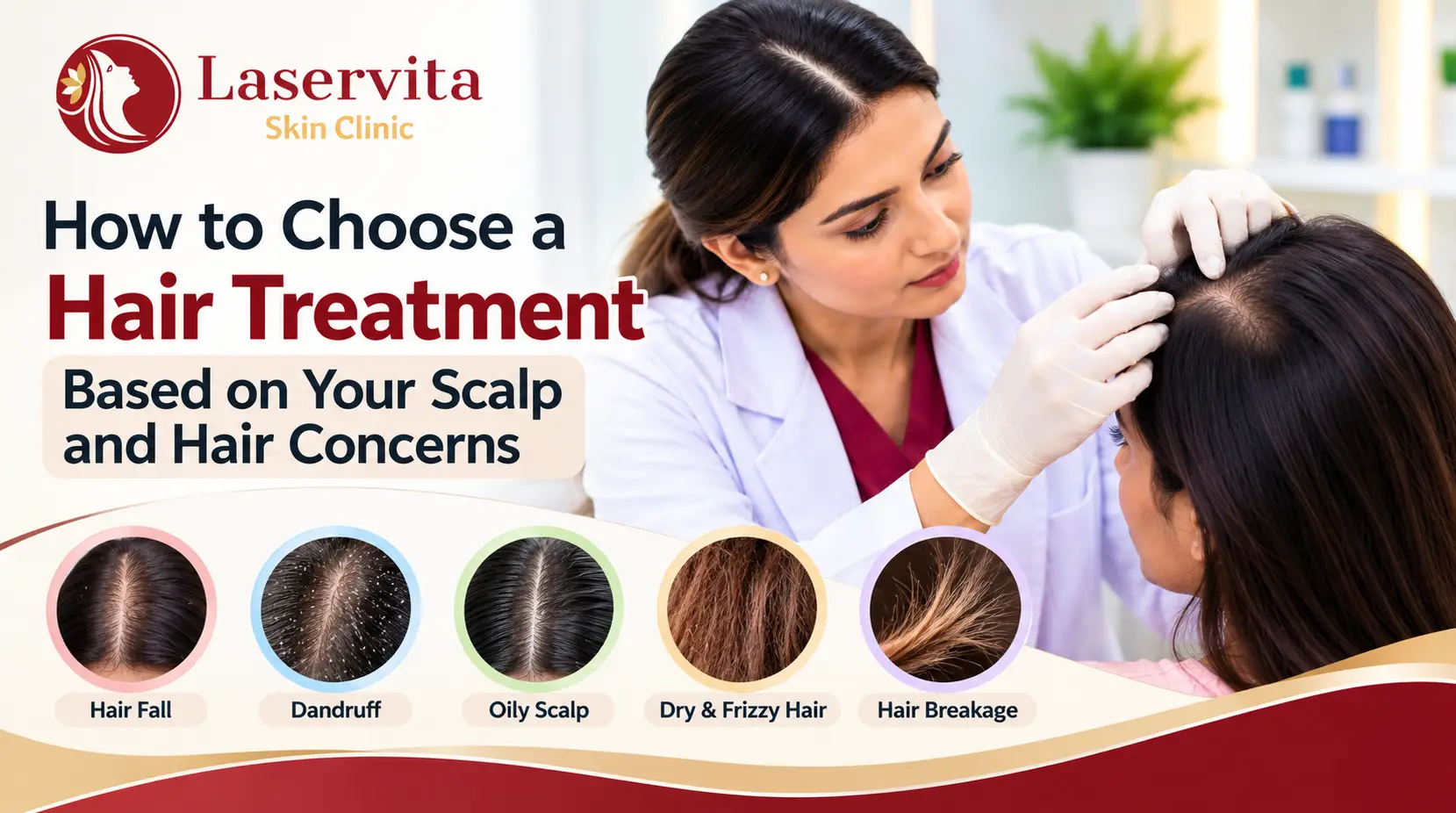
Your scalp is skin, while the visible length of your hair consists of hair fibres that can become dry, damaged or brittle. These two areas may need different types of care.
For example, an oily scalp may benefit from an appropriate cleansing routine, while dry or chemically treated hair may need conditioning and reduced heat styling. Persistent itching, scaling or hair loss may require medical assessment rather than cosmetic products alone.
Before choosing a treatment, consider:
- Scalp condition: Is your scalp oily, dry, itchy, flaky or sensitive?
- Hair texture: Is your hair straight, wavy, curly, fine, coarse or chemically treated?
- Main concern: Are you experiencing hair shedding, thinning, breakage, frizz or dandruff?
- Duration: Did the problem start recently, or has it continued for several months?
- Other symptoms: Do you have redness, pain, scaling, bald patches or changes in the scalp?
These details can help you decide whether to begin with basic hair-care changes or arrange a professional evaluation.
How to Choose Treatment for Different Hair and Scalp Concerns
1. Hair Fall and Excessive Shedding
Hair shedding can occur for many reasons, including hereditary hair loss, illness, stress, hormonal changes, certain medications and nutritional deficiencies. Some people also experience temporary shedding after a significant illness or other physical stress.
The right treatment depends on the cause. A dermatologist may review your medical history, examine the scalp and recommend tests when appropriate. Treatment may involve addressing an underlying condition, prescribed medication or other options suited to the diagnosis.
Hair oils, shampoos and cosmetic treatments may improve hair manageability, but they do not treat every cause of hair loss. Avoid taking high-dose supplements without professional advice, as excessive amounts of some nutrients can be harmful.
Read the IADVL guide to hair loss for additional information about common causes and treatment approaches.
2. Dandruff and a Flaky Scalp
Dandruff can cause visible flakes and itching. The scalp may be oily or dry, and similar symptoms can also occur with other conditions, including seborrhoeic dermatitis, psoriasis or certain infections.
For uncomplicated dandruff, an appropriate anti-dandruff shampoo may help. The choice of active ingredient and frequency of use depend on the product instructions, symptoms and scalp sensitivity.
If scaling persists despite suitable care, or the scalp becomes very red, painful or develops thick plaques, seek professional assessment rather than repeatedly switching products.
A clinician may assess whether professional scalp peel treatment is suitable for your specific scalp concerns. A scalp peel is not a universal treatment for dandruff and should not replace medical care when an underlying skin condition is present.
3. Oily Scalp and Product Buildup
An oily scalp can make hair look flat or greasy soon after washing. Sweat, styling products and natural oils can also accumulate on the scalp and hair.
Choose a shampoo suited to your scalp and wash as often as needed to maintain comfort and cleanliness. People with oily scalps may need more frequent washing than those with dry scalps. Focus shampoo on the scalp and use conditioner mainly on the hair lengths if they need additional moisture.
Avoid aggressive scrubbing or excessive use of clarifying products, as these can irritate the scalp or dry out the hair. If oiliness occurs alongside persistent itching, redness or unusual scaling, a dermatologist can help identify possible causes.
4. Dry, Rough or Frizzy Hair
Dryness and frizz often relate to the condition of the hair shaft, frequent heat styling, chemical processing, environmental exposure or the natural texture of the hair. Curly and coily hair may need additional conditioning to reduce tangling and breakage.
Consider a gentle shampoo, a suitable conditioner and a leave-in product if your hair needs extra moisture. Use a soft towel or a microfibre towel to absorb water without vigorous rubbing, and detangle carefully.
Reduce excessive heat from blow dryers, straighteners and curling irons. These measures can improve manageability and reduce damage, although they do not treat hair loss caused by a medical condition.
5. Hair Breakage and Split Ends
Hair breakage differs from shedding at the root. Broken hairs may appear as shorter strands, uneven lengths or split ends. Frequent bleaching, chemical straightening, high heat, rough brushing and tight hairstyles can weaken hair fibres.
To help reduce further damage, limit harsh chemical processes, use conditioner, detangle gently and avoid hairstyles that pull tightly on the roots. Trimming split ends can improve the appearance of the hair, but it does not repair the damaged portion permanently.
If breakage occurs alongside scalp irritation, patchy loss or a noticeable reduction in hair density, a professional assessment can help determine whether another problem is involved.
6. Hair Thinning and a Widening Part
Gradual thinning may be associated with hereditary hair loss, hormonal factors, ageing or other health conditions. Some people notice a widening part, a thinner ponytail or reduced density at the crown, while others experience a receding hairline.
Hair thinning should not automatically be attributed to poor scalp hygiene. A dermatologist can examine the pattern of hair loss and decide whether treatment or further investigation is appropriate. Depending on the diagnosis, options may include prescribed medicines or selected procedures, with results and suitability varying between individuals.
Which Professional Hair Treatment Might Be Suitable?
Professional treatments should be selected according to the concern being addressed. A scalp-focused procedure may help with certain scalp-care goals, while medical hair-loss treatment requires a different approach.
Scalp Peel Treatment
A scalp peel is a professional exfoliation treatment intended to address selected concerns involving surface buildup and scalp care. Whether it is appropriate depends on the scalp condition and the formulation used.
It should not be presented as a guaranteed way to regrow hair or as a treatment for every type of dandruff or hair fall. If you have a sensitive, inflamed or damaged scalp, ask a qualified professional whether the procedure is appropriate before proceeding.
Medical Treatment for Hair Loss
When hair loss is related to a medical or hereditary condition, a dermatologist may discuss evidence-based treatment options after assessment. Some treatments require consistent use over several months, and benefits can vary.
Do not start prescription hair-loss medicines or stop existing medicines without consulting an appropriate healthcare professional. Treatment decisions may depend on age, medical history, pregnancy considerations and the specific diagnosis.
Cosmetic Treatments for Hair Texture
Conditioning treatments and selected salon services may temporarily improve smoothness, shine and manageability. However, they generally work on the hair shaft rather than correcting an underlying scalp disorder or restoring lost hair density.
If your main concern is frizz, dryness or chemical damage, a suitable hair-care routine may be more relevant than a medical procedure. If you have persistent shedding or scalp symptoms, identify the cause before investing in cosmetic treatments.

How to Build a Daily Hair-Care Routine
A consistent routine can help maintain scalp cleanliness and reduce avoidable damage. It should be adjusted according to your scalp's oiliness, hair texture and activity level.
Choose the Right Shampoo
Select a shampoo based on your scalp condition rather than the appearance of the hair lengths alone. If you have dandruff, a suitable medicated shampoo may be helpful. Follow its instructions and seek advice if it causes irritation or does not improve symptoms.
Condition the Hair Lengths
Conditioner helps reduce friction and tangling. Apply it mainly to the mid-lengths and ends if those areas are dry, and adjust the amount according to your hair texture.
Limit Heat and Chemical Damage
Reduce frequent high-heat styling and avoid overlapping chemical treatments where possible. If you colour, straighten or chemically process your hair, follow appropriate aftercare and give your hair time to recover between procedures.
Handle Wet Hair Gently
Wet hair can be more vulnerable to stretching and breakage. Avoid vigorous towel rubbing and aggressive brushing. Gently remove tangles using a suitable comb or brush and allow the hair to dry with minimal heat when practical.
Support General Health
A balanced diet containing sufficient protein and a variety of nutrients supports general health, including normal hair growth. If you suspect a deficiency or have persistent hair loss, seek professional advice rather than relying on supplements without an assessment.
For a broader overview of available dermatology services, visit Laservita Skin Clinic.
When Should You Consult a Dermatologist?
Consider a professional assessment if hair shedding continues, your hair density is decreasing or your scalp symptoms do not improve with appropriate basic care.
Arrange prompt medical evaluation for sudden or patchy hair loss, scalp pain, significant redness, sores, pus or areas where the skin appears scarred. These symptoms may require specific diagnosis and treatment.
A dermatologist may ask about recent illnesses, medication changes, diet, family history, styling practices and the timing of your symptoms. Depending on the findings, the assessment may include examination of the scalp and hair, and sometimes laboratory tests.
If you are comparing local care options, you can review the clinic's information about a female dermatologist in Patna and consider whether the clinician's expertise matches your concerns.

How to Choose Hair Treatment in Patna
When comparing options for hair treatment in Patna, look for an approach that starts with understanding your scalp and hair concerns rather than promising the same result for every person.
- Ask whether the treatment addresses your specific concern, such as dandruff, scalp buildup, hair breakage or diagnosed hair loss.
- Understand the expected benefits, limitations, potential side effects and number of visits, if applicable.
- Check whether medical assessment is needed before beginning a procedure.
- Ask what home care is recommended and whether follow-up will be necessary.
- Be cautious of claims promising guaranteed hair growth or permanent results for everyone.
For scalp concerns, you can review scalp peel treatment in Patna and discuss suitability with a qualified professional. The right choice depends on the diagnosis, the condition of your scalp and your expectations.
Final Thoughts
Choosing the right hair treatment begins with identifying whether your concern comes from the scalp, the hair shaft or an underlying cause of hair loss. Dandruff, excess oil, dryness, breakage and thinning can need different approaches, so a single treatment is unlikely to suit everyone.
For those exploring hair treatment in Patna, start with appropriate daily care and seek professional assessment when symptoms persist or hair loss is noticeable. A personalized plan can help you understand which options are suitable, what results are realistic and how to care for your scalp and hair over time.
Frequently Asked Questions
Start by identifying your main concern, such as hair fall, dandruff, scalp itching, dryness, breakage or thinning. A dermatologist can examine your scalp, review your history and recommend an approach based on the likely cause.
The right approach depends on the cause and severity. Medicated shampoos or other treatments may be recommended for dandruff and certain scalp conditions. Persistent itching, redness or thick scaling should be assessed by a dermatologist.
Scalp treatment focuses on the skin of the scalp, including concerns such as dandruff, oiliness and irritation. Hair treatments may focus on the hair shaft, dryness, breakage or frizz. Hair loss may require a medical assessment to identify its cause.
Consider an assessment if hair shedding persists, hair density decreases, your parting widens, bald patches appear or the scalp becomes painful, inflamed or itchy. Sudden or patchy hair loss should be assessed promptly.
Scalp treatments may help when a scalp condition contributes to hair shedding, but they do not address every cause of hair loss. The right treatment depends on the diagnosis, which may involve clinical examination and sometimes further tests.
Choose products according to whether your scalp is oily, dry, sensitive or affected by dandruff, and whether your hair is fine, curly, chemically treated or prone to breakage. Avoid products that cause irritation and seek professional advice for persistent symptoms.
Hair thinning can have several causes, including hereditary factors, illness, nutritional deficiencies and hormonal conditions. A dermatologist can assess the pattern of thinning and discuss appropriate medical or procedural options where suitable.
Salon treatments may improve the appearance or manageability of the hair shaft, but they may not treat the underlying cause of hair loss. Persistent shedding or thinning needs appropriate assessment rather than relying only on cosmetic treatments.
The timeline varies by condition and treatment. Scalp symptoms may respond on a different timeline from hair growth, which often takes several months to assess. Your clinician can explain realistic expectations and follow-up.
A balanced diet, gentle hair handling and suitable washing practices support general hair health. However, hair loss caused by a medical condition or deficiency may need specific assessment and treatment.
Related Treatments & Services
Dr. Farheen Jamal
Dermatologist & Skin Specialist
Dr. Farheen Jamal is a dermatologist and skin specialist providing personalized care for pigmentation, melasma, acne, hair and skin concerns. She focuses on individualized diagnosis and evidence-based dermatological treatment tailored to each patient's skin type and condition.